3
Things I’m Loving, Reading, Watching or Doing
1. Article: How This Period Expert Gets the USWNT Ready for the World Cup — Alexis Morillo
Research on girls and women athletes is finally confirming what good coaches have known for years: women aren’t just smaller men. From training loads to recovery to monthly hormone cycles, their physiology is different, and coaching should reflect that. As a dad raising daughters and someone who’s coached athletes for two decades, I’m glad we’re finally taking this seriously. Aaaaand, even more on an adjacent topic in this week’s big dad idea below.
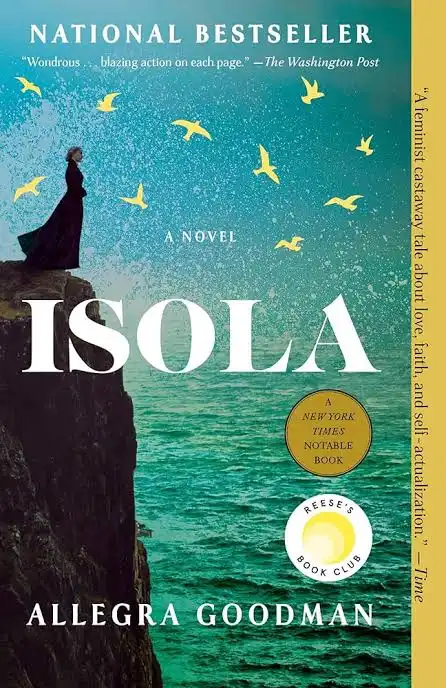
2. Book: Isola — Allegra Goodman
You know how some books are simply a great story that you can’t wait to get back to? Isola checks that box. Based on a true story, it follows a young girl who learns to survive against incredible odds. I finished it feeling entertained and inspired. And also strangely challenged by her survival skills, so much so that on a hike in the mountains last weekend, I was thinking, “What would Marguerite do if she were stranded here?”
3. Music: The Great Divide — Noah Kahan
I joked to my wife that Noah Kahan emotes a bit too much for my Gen X self . . . and yet here I am wearing out this album. 🙂 Beneath all the melancholy are some honest observations about life, which is probably why he’s selling out shows all over the world right now. One of the things I appreciate most is the reminder that life can be hard, sadness is part of being human, and not every difficult emotion needs to be fixed. In fact, I gave my kids a similar reminder this week as they headed back to school.
2
Quotes Worth Pondering
“The best thing one can do when it’s raining is to let it rain.” — Henry Wadsworth Longfellow
“Empathy is about finding echoes of another person in yourself.” — Mohsin Hamid
1
Big Dad Idea
Health, Parenting, or Personal Growth
Learn About Perimenopause
This week, something a wee bit different. But it’s something I think us dads should definitely understand.
And if you’re raising tweens or teenagers, there’s a decent chance another major transition is happening in your house at the exact same time: perimenopause. Not for you. For your wife. And if she’s going through it, it’s a whole-family experience.
At our gym, FitWit, I talk with women about this almost daily: fatigue, brain fog, weight gain that seems to come out of nowhere, poor sleep, anxiety, feeling like a stranger in your own body. Most of us men know embarrassingly little about it.
Our cultural understanding is mostly built on jokes. You’ve seen the memes about husbands chewing too loudly and the mood-swing stories. Admittedly, some of these are hilariously accurate.
(Also maybe a reason why when I recommended the book The Comfort Crisis to my wife, she about killed me. To paraphrase her: “This is cute. A man writing about how we should go out of our way to get uncomfortable. I’m not looking for more ways to get uncomfortable.” 🙂 But what isn’t funny is how we’ve historically treated this stage of women’s health.
Last week, a gym member told me about a conversation with her doctor while discussing hormone therapy for her symptoms. The doctor said, “Just a heads up. For insurance to cover it, we’ll probably have to code it as low libido.”
She looked at me and said, “Isn’t that crazy?”
It took me a few seconds to get what she meant. Exhausted. Can’t think clearly. Gained weight. Doesn’t feel like herself. Apparently, none of that was enough on its own. But bill it under low libido, and suddenly there’s a diagnosis insurance will pay to treat.
I don’t fully understand how insurance coding works; there may be technical reasons this happens that I’m not seeing. But it’s hard not to notice the message it seems to send: your quality of life might not qualify, but if it affects the quality of life for a man, we got you.
Whether or not that correlation is 100% accurate, here’s what I do know: our wives carried our children. Their bodies have been through more hormonal change than most of us will ever understand. Many are also carrying the invisible mental load that keeps the whole family running. The least we can do is take this seriously.
Spoken as a guy who is just starting to grasp how challenging this can be.
Now, just so we’re all on the same page: perimenopause is the transition, sometimes lasting years, leading up to menopause, which is the point when periods have stopped for a full year. That’s about all most of us know, but we should do better.
So this week, if there’s a woman in your life going through this, ask her what support looks like right now. Specifically. Then actually do the one thing she says.
That’s our assignment. I’ll be right there with you!
PS. If you’re interested in how exercise can be adapted during perimenopause, our coaches at FitWit put together a practical guide. If your wife could use it (or if you’re a woman reading this and you’d like a copy) just reply to this email and I’ll gladly send it your way.
Thanks for reading, dads.
Let’s make this time count!